
 Sign in
 Sign up


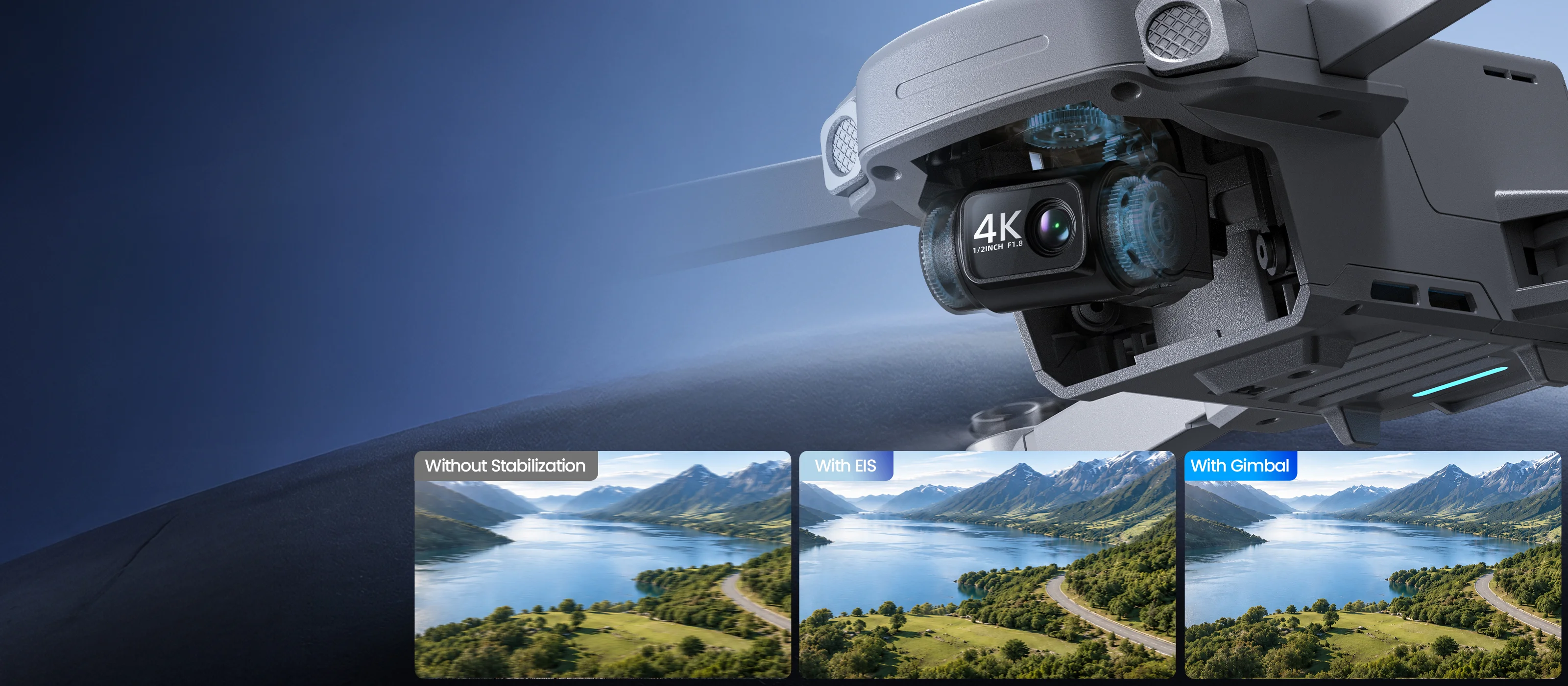
Gimbal vs EIS: Which Drone Stabilization Do You Actually Need?
Gimbal vs EIS: Which Drone Stabilization Do You Actually Need?
Digital stabilization and mechanical stabilization solve the same problem in different ways.
See how EIS and a 3-axis gimbal behave in real flight—and which one fits the way you want to use your drone.
When shopping for a camera drone, it is easy to focus on numbers first: 4K video, photo resolution, transmission range, or flight time.
But there is another feature that has an immediate impact on how your aerial video actually looks: stabilization .
Two drones can both record in 4K and still produce very different-looking footage. One reason is the way the camera is stabilized while the aircraft is moving.
The simple difference is this: EIS stabilizes the image digitally. A gimbal stabilizes the camera mechanically.
EIS works on the image. A gimbal works on the camera.
Why Stabilization Matters—Not Just Resolution
A drone is rarely perfectly still in the air. To fly forward, it tilts. To change direction, it rolls and turns. Wind can cause small corrections, and acceleration or braking introduce additional movement.
All of that motion affects the camera.
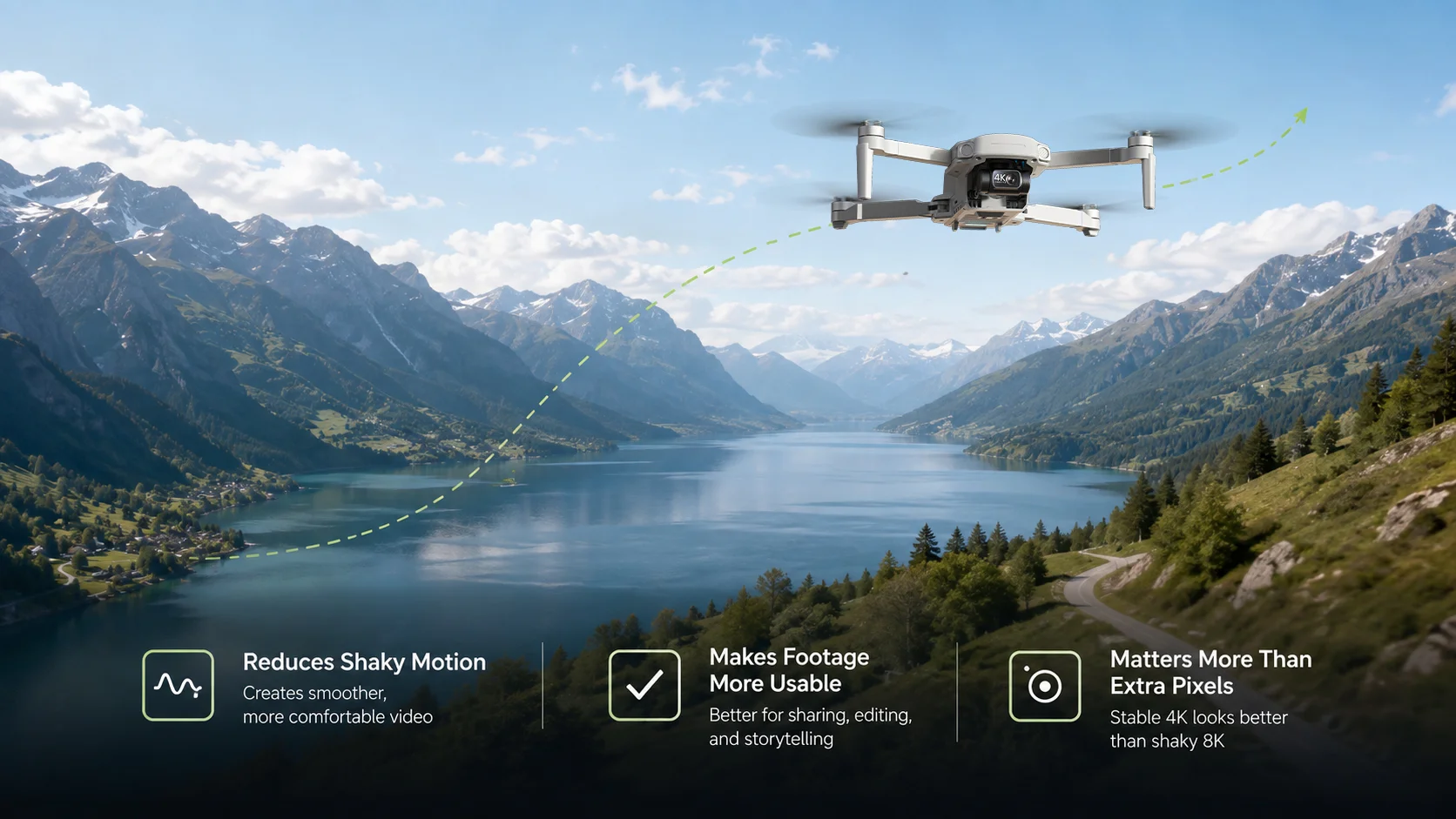
A 4K camera can capture plenty of detail, but resolution alone does not make moving footage smooth.
Resolution determines how much detail the camera can capture. Stabilization helps determine how controlled that detail looks while the drone is moving.
What Is EIS on a Drone?
EIS stands for Electronic Image Stabilization .
Instead of physically moving the camera to compensate for aircraft motion, EIS uses digital processing to reduce visible shake in the recorded image.
Depending on how the system is implemented, it may shift, crop, or digitally correct the image area to create a steadier-looking result.
EIS keeps the image steadier through software.
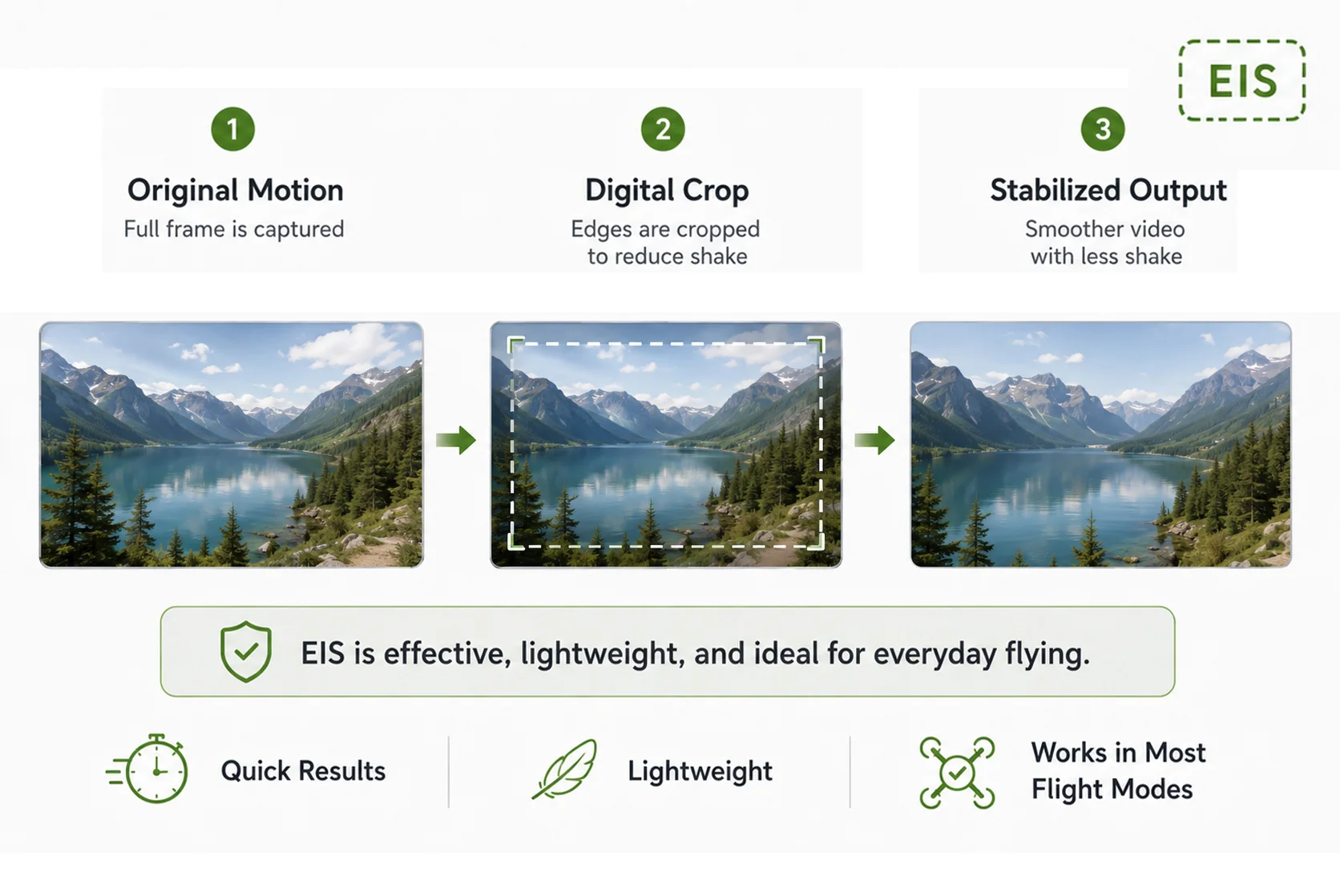
That makes EIS a practical choice for lighter, simpler drones and everyday footage—especially when smoother video is useful, but not the main reason you are flying.
What Is a 3-Axis Gimbal?
A gimbal moves the camera, not the image.
Instead of correcting footage after movement occurs, a 3-axis gimbal physically moves the camera to counter unwanted aircraft motion.
A gimbal stabilizes the camera itself.
Gimbal vs EIS: The Difference at a Glance
EIS
Stabilizes the image
Digital correction for lighter, simpler camera flying.
3-Axis Gimbal
Stabilizes the camera
Mechanical camera control for smoother aerial filming.
| Comparison | EIS | 3-Axis Gimbal |
|---|---|---|
| Stabilization method | Digital processing | Mechanical camera movement |
| What is stabilized | Recorded image | Camera itself |
| Digital cropping may be used | Often | Not required for mechanical stabilization |
| Weight and complexity | Generally lower | Generally higher |
| Best suited for | Casual flying and everyday video | Smoother aerial filming |
What Difference Will You Actually Notice While Flying?
Flying Forward
A drone tilts forward as it accelerates. A gimbal can physically compensate for some of that camera tilt while EIS works on the image after movement occurs.
Turning
Abrupt aircraft movement often feels abrupt on camera too. A gimbal can help turns and pans feel more controlled.
Sideways Flight
During lateral movement, aircraft banking can affect the horizon. Mechanical stabilization helps the camera stay more level across the scene.
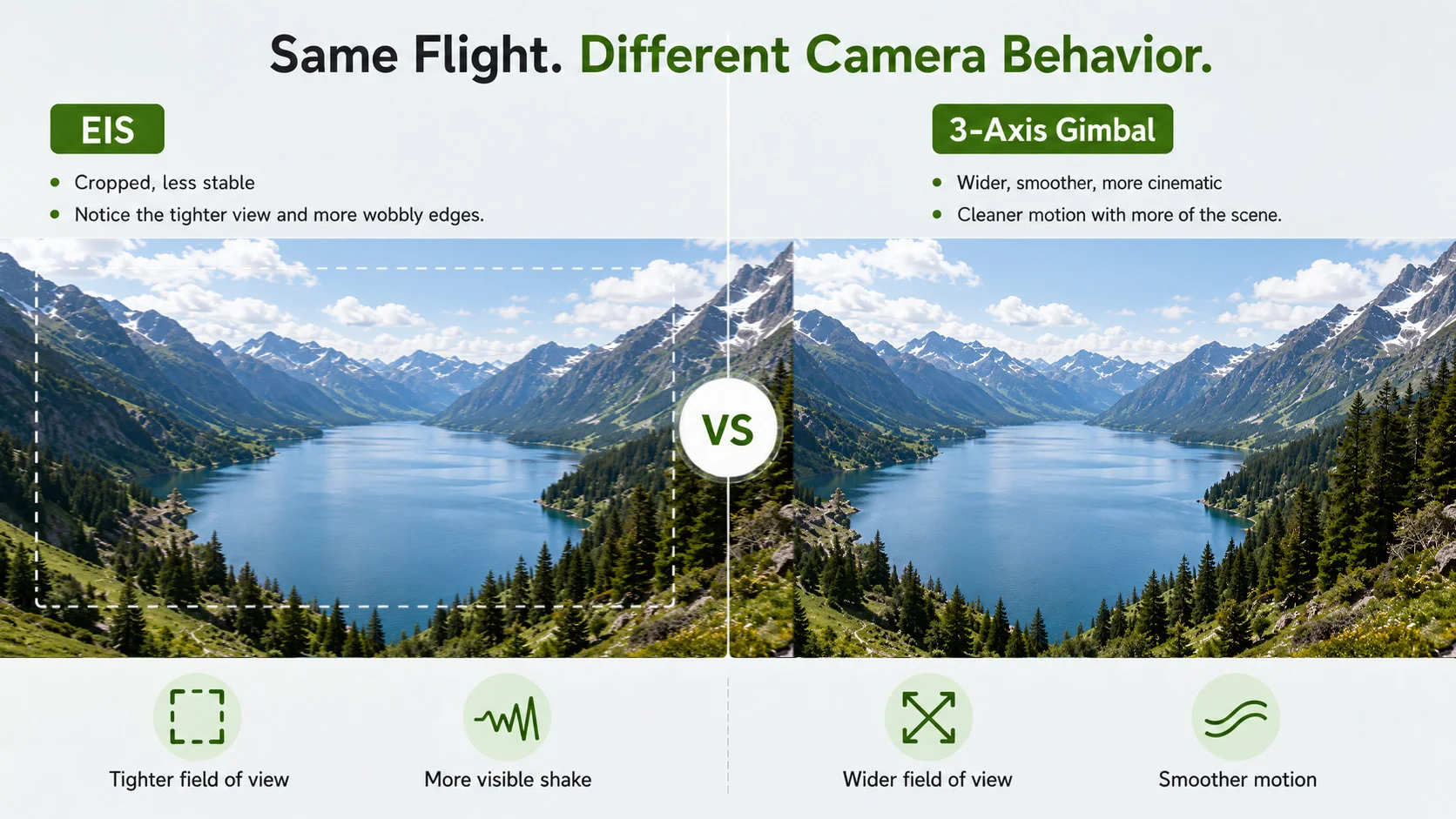
Small wind corrections can still show up in the aircraft's movement. EIS can reduce visible shake, while a gimbal adds physical camera isolation from some of those corrections.
The difference becomes even more noticeable in slow reveals, pull-aways, and landscape shots, where controlled camera motion is part of the shot—not just a specification.
When Is EIS Enough?
Not every drone buyer needs a mechanical gimbal. EIS can be a smart choice when the experience of flying still matters more than building a more advanced aerial camera setup.
You Are Learning to Fly
Your priority is takeoff, hovering, navigation, GPS functions, and confidence.
You Mostly Take Photos
You want aerial perspectives, but cinematic camera motion is not your main goal.
You Record Occasional Clips
You want useful stabilization for everyday video without a more complex camera system.
You Prefer a Simple Setup
Weight, simplicity, and price matter more than maximizing video smoothness.
If flying matters more than filmmaking, EIS may already be enough.
When Does a Gimbal Become Worth It?

The answer changes when you stop asking, “Can my drone record this?” and start asking, “Can I make this shot look smooth?”
This is the point where the footage itself starts to matter more.
Travel footage: smoother views of roads, coastlines, countryside, and destinations.
Family memories: clips that feel controlled enough to keep, edit, and share.
Intentional camera moves: reveals, pull-aways, and tracking shots that feel more polished.
A gimbal becomes valuable when the footage starts to matter as much as the flight.
Gimbal or EIS: Which Should You Choose?
Do not choose by specification alone. Choose by what you want to do with the footage.
EIS — Best if flying comes first
You are mainly interested in learning to fly.
You want aerial photos and occasional video.
You prefer a simple, lightweight setup.
You are not yet sure how seriously you will use aerial video.
3-Axis Gimbal — Best if footage matters more
You already know that video quality matters to you.
You want smoother motion during turns and forward flight.
You plan to record trips, landscapes, family activities, or outdoor adventures.
You want to start learning more intentional drone shots.
From EIS to Your First Gimbal Drone
For many pilots, a gimbal is not the first step. It is the next step.
Learn to Fly
Build confidence with takeoff, hovering, navigation, and return.
Start Recording
Capture places, photos, and short clips from the air.
Care About Smoothness
Start noticing the horizon, turns, and motion in your footage.
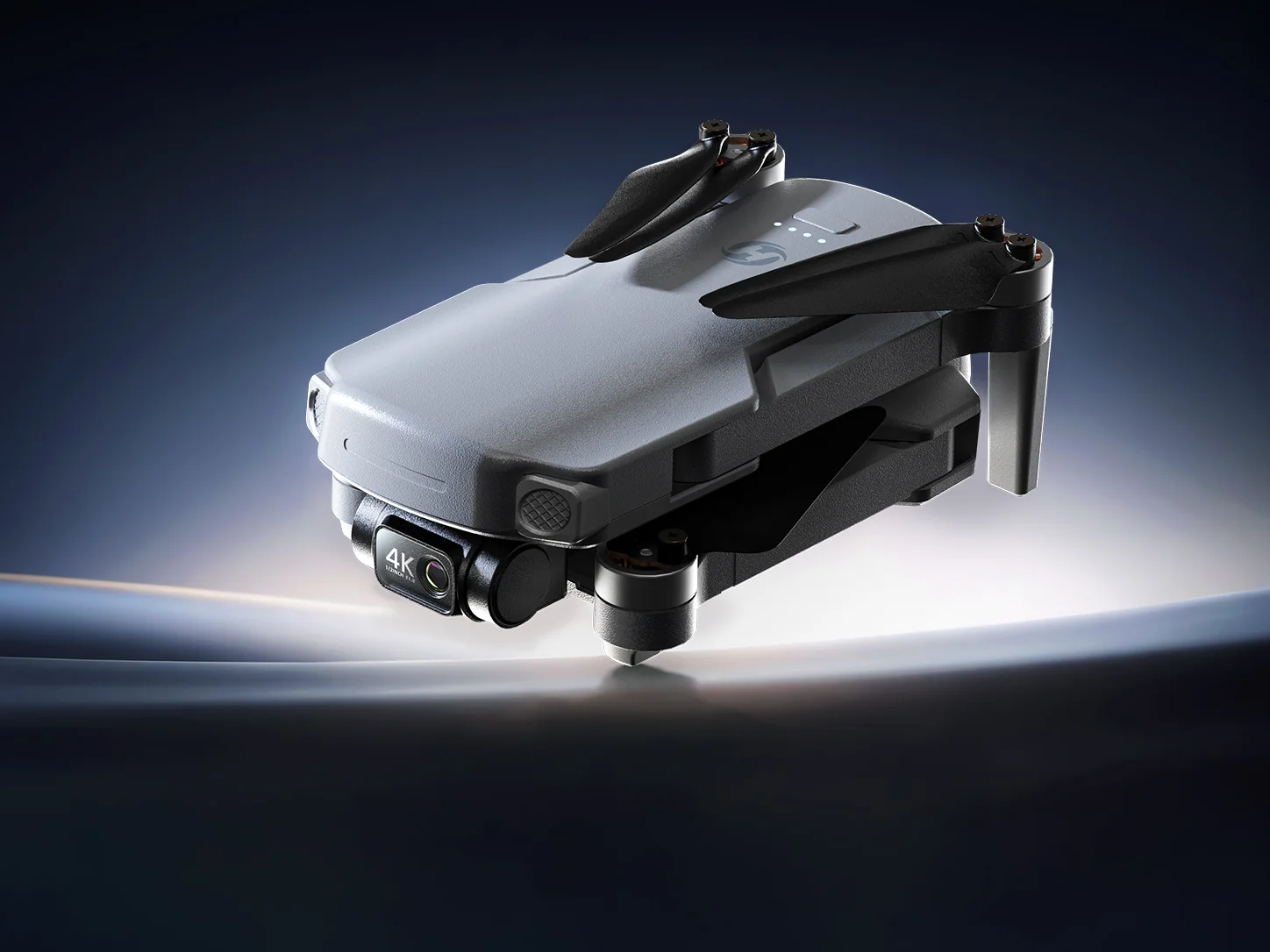
Move Into Mechanical Stabilization
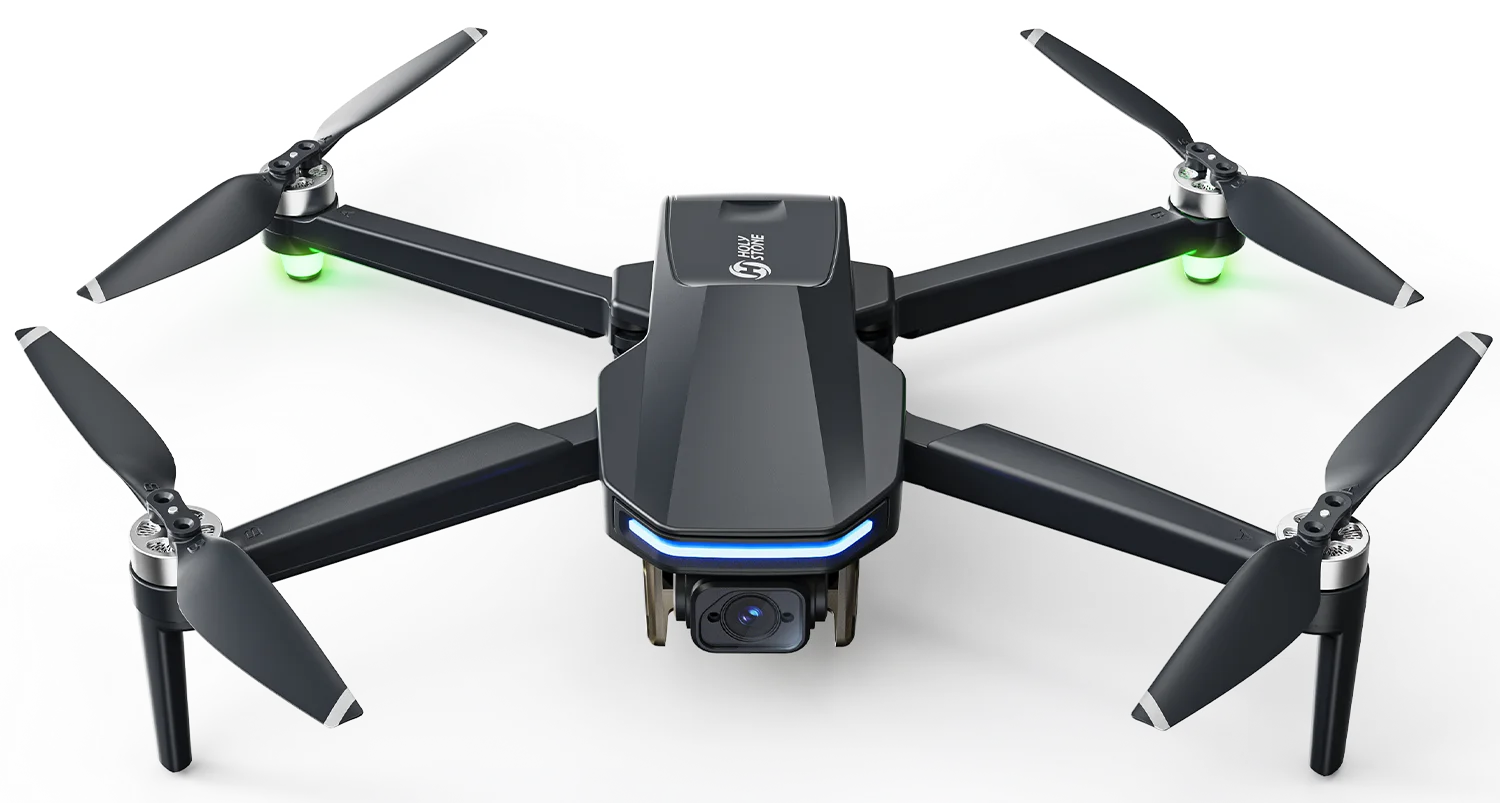
The HS360G is designed as a natural next step for pilots who want smoother aerial footage without jumping straight into a more advanced creator platform. If you are comparing what to look for before buying, read our beginner’s guide to choosing your first gimbal drone.
Frequently Asked Questions
Is a gimbal better than EIS on a drone?
For smooth aerial video, usually yes. A gimbal physically stabilizes the camera, while EIS corrects the image digitally. EIS still makes sense when simplicity, weight, or price matters more.
Does EIS reduce image quality?
It can. Some EIS systems use part of the image area for correction, which may reduce the available field of view.
Do beginners need a 3-axis gimbal?
Not always. If you are mainly learning to fly, EIS may be enough. A 3-axis gimbal becomes more useful when smoother video is one of your main goals.
Is a 3-axis gimbal useful for photos?
Yes. Its biggest visible benefit is in video, but it can also help keep framing and camera angle more controlled during flight.
Can a drone use both a gimbal and EIS?
Yes. Mechanical and electronic stabilization can work together in the same camera system.
When should I upgrade from EIS to a gimbal drone?
Upgrade when you start caring less about simply recording the flight and more about how smooth, level, and controlled the footage looks.
Ready for Smoother Footage?
If video is starting to matter as much as the flight, HS360G is a natural next step into 3-axis mechanical stabilization.
Explore HS360G

COMMENTS